
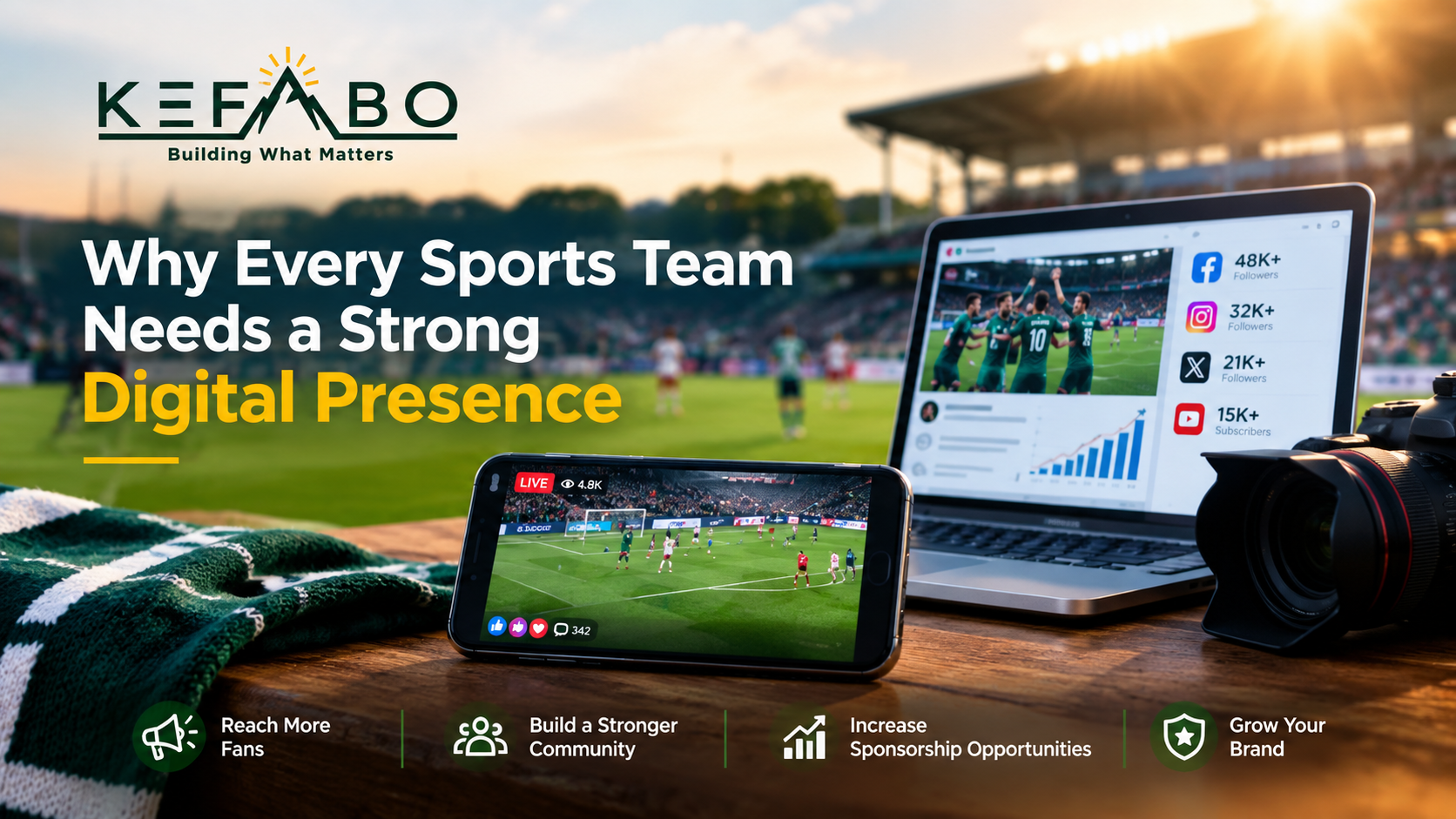

A Match may last 90minutes. A race may last two hours. A tournament may last a weekend.
But relationship between a sports organization or team and its audience does not end when the final whistle blows or when the finished line is crossed.
In modern sports, the competition continues online.
Fans and audiences discover teams through search engines, follow them through social media, Check fixtures and results on websites, watch highlights on video platforms, purchase club or team merchandise through online stores, and increasingly expect organizations to communicate with them instantly.
For sports teams, leagues, federations, academies, agencies and other sports organizations, having an active digital presence is no longer simply a marketing advantage. It is becoming part of how a sports organization is experienced, discovered, trusted and commercially valued.


Your Digital Presence is Part of Your Organization
When someone hears about a sports team today, one of the first things they may do is search for it.
What they find matters.
An outdated website, inactive social media account, incomplete team information or inconsistent branding can create a very different impression from a professional, active and informative digital presence.
Your digital platforms should answer basic questions quickly:
- Who are you?
- What sport do you represent?
- Where do you compete?
- When is your next event?
- Who are your players or athletes?
- How can fans follow you?
- Where can people buy tickets or merchandise?
- How can sponsors or partners contact you?
- What is happening within your organization?
A strong digital ecosystem turns those answers into an experience rather than leaving fans to search across disconnected platforms.
There is nothing more powerful for a fan than that feeling of closeness between themselves and their favorite club or athlete. This is not only limited to sports like football, or basket ball. Even Sports like F1 racing, Cycling, Tennis, Swimming, Boxing and many others.
The Opportunity for African Sports
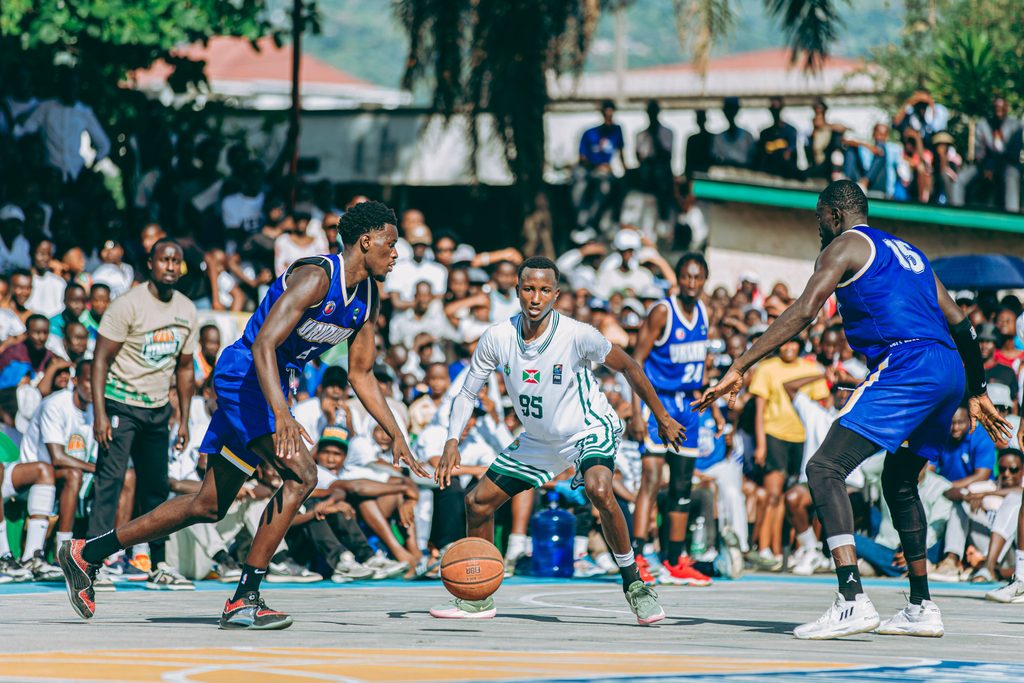
It is worth noticing that in the African sporting environment in areas like football , basketball and other team sports there is generally a disappointing relationship between fans and their favorite players. An inability to showcase key or star players. Poor archiving of player statistics. Club historical records, statistics and organizational achievements may be difficult to find. Local talent may receive limited international visibility. An inability to efficiently sell club merchandise and apparel efficiently to fans at home and abroad. Lack of international publicity which influences directly the buying and selling of players from within their local leagues and even international leagues as well. Poor ticketing sales systems which limits the reach and potential for fans to buy tickets, such as season long ticket purchases and even membership discounts. Ticketing can remain unnecessarily dependent on physical or informal purchasing channels. Fans living outside the team's immediate geographical area may have few ways to remain connected .Sponsors may have limited ways to activate their partnerships beyond physical branding. All of these and many more directly affect the revenue of a sports organization , team or brand.
Perception Matters in the Sports Industry.
It is not limited to just having a team roster, Staff and an active fan base , the manner in which a sports organization is represented digitally directly influences their perception in the minds of investors, sponsors, partners, athletes, media and even other stakeholders and competitors. It is important for ambitious sports institutions to realize that in order to hit certain financial targets and commercial goals, it is absolutely crucial for them to invest , enhance , modernize their digital experience in order for them to be taken seriously. They cannot simply rely on tournament earnings, government grants and stipends, seed funding from enthusiastic partners, fans and well wishers. It is absolutely important for all sports organizations to leverage their digital platforms and presence in order to be able to make the most of the revenue available for businesses and organizations through these streams. Any sports brand or organization already leveraging its digital presence and platform to increase revenue is a fertile ground for partnership and Investments. Investors and partners often ask themselves; how can we benefit from investing in this institution? How much reach does this institution have and how does it benefit my brand or company? Can the sales of my product be facilitated through exposure from this brand or institution? Does the credibility of my brand increase or decrease by being affiliated to this institution or brand? And many more similar questions pertaining in this direction. Often it is assumed that digital growth or digital investment is limited to only large organizations or brands but more often than not , that is not the case. Many young or new institutions gain a lot of visibility and traction through active and existing digital channels, where they are able to leverage fan engagement, facility showcasing , and other services to gain sponsorship and partnership. Digital presence is necessary for sports brands and institutions at every stage, whether new or old, large or small.
Social Media Is Not the Whole Digital Strategy
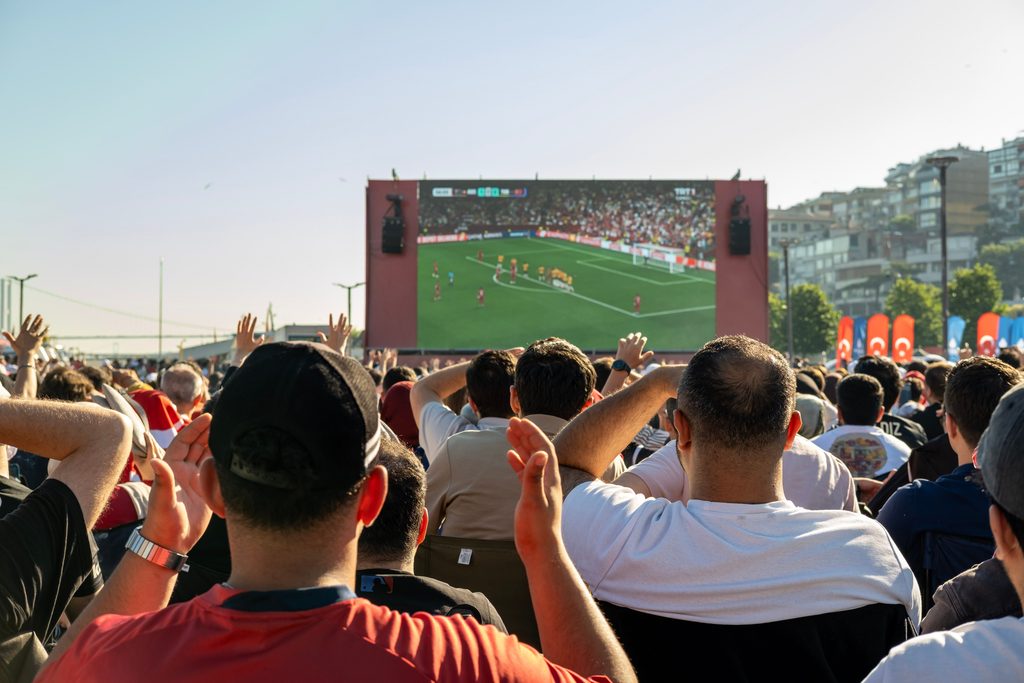
One of the most common mistakes sports organizations make is treating social media as their entire digital presence.
Social media is important. Research into sports organizations continues to identify social platforms as major channels for fan engagement.(ScienceDirect)
But a social media profile is not the same thing as owning a digital home.
Platforms change. Algorithms change. Account reach changes. Audiences move.
A professional sports organization should ideally have an ecosystem in which its website, social platforms, video channels, email communications, ticketing, merchandise and other digital services support one another.
The website can serve as the central source of verified information while social media distributes stories, updates and conversations to audiences where they already spend their time.
The goal is not simply to post more. The goal is to build a connected digital experience.
Fans Want More Than Match-Day Updates
A sports organization has far more stories to tell than the final score.
Training sessions. Player profiles. Behind the Scenes content. Community initiatives. Youth development. Interviews. Historical moments. Statistics. Fixtures. Results. Injury updates. Transfers. Merchandise. Sponsorship activations. Academy programs.
These create opportunities to keep supporters connected between events. A strong content strategy can transform a team from something fans only think about on match day into something they interact with throughout the week and this applies far beyond football.
Basketball teams, athletics clubs, rugby organizations, volleyball teams, motorsport organizations, combat sports promotions, swimming clubs, cycling teams, esports organizations, academies and sporting agencies can all build digital communities around their athletes, competition and stories.
A Strong Digital Presence Can Strengthen Sponsorship
Sponsors increasingly need more than a logo on a banner. They want a visibility, engagement and opportunities to connect their brand with a relevant audience.
A well-managed digital presence gives sports organizations additional assets that can be packaged into sponsorship opportunities.
For example:
- Sponsored social content
- Player or athlete feature
- Digital match-day campaigns
- Website advertising
- Sponsored video series
- Newsletter placements
- Competition or giveaway campaigns
- Branded community initiatives
- E-commerce collaborations
- Digital fan experiences
This does not mean every social media impression automatically becomes value . The important point is that digital platforms can give sports organizations more measurable ways to demonstrate how they connect sponsors with their audiences. Recent sports-business research increasingly focuses on connecting fan engagement with commercial objectives and first-party audience data. (PwC)
Imagine in a football club in Rwanda or Kigali, with 20,000 loyal fans across the entire country, but no website , no organized fan database and no digital merchandise system. The Club is not able to leverage these these fans against partners and potential investors because more often than not the entire number of a clubs fans are present on the pitch on matchday. Meaning A name on the shirt is simply not enough anymore. Matchdays are usually once a week and a once a week appearance is not enough to keep fans engaged enough to make a sponsor or partner get the most out of their sponsorship, partnership or investment. With a well tailored and engaging digital ecosystem , a club is able to leverage fans from all corner of their country and even those overseas. From those limited to social media, to those who want behind the scenes content, exclusive images and videos, club merchandise and apparel , exclusive community sponsored events , like partner organized live match streams during away games which directly transfers to more revenue for the clubs and said sponsor.(For example a club been sponsored by a brand like Mutzig or Virunga, sales of drinks benefit both the club and the Brewery). This also makes these clubs more attractive to sponsors and potential partners. A sports organization that fails to invest properly on its digital presence fails to capitalize on all the commercial opportunities that the organization can capture.
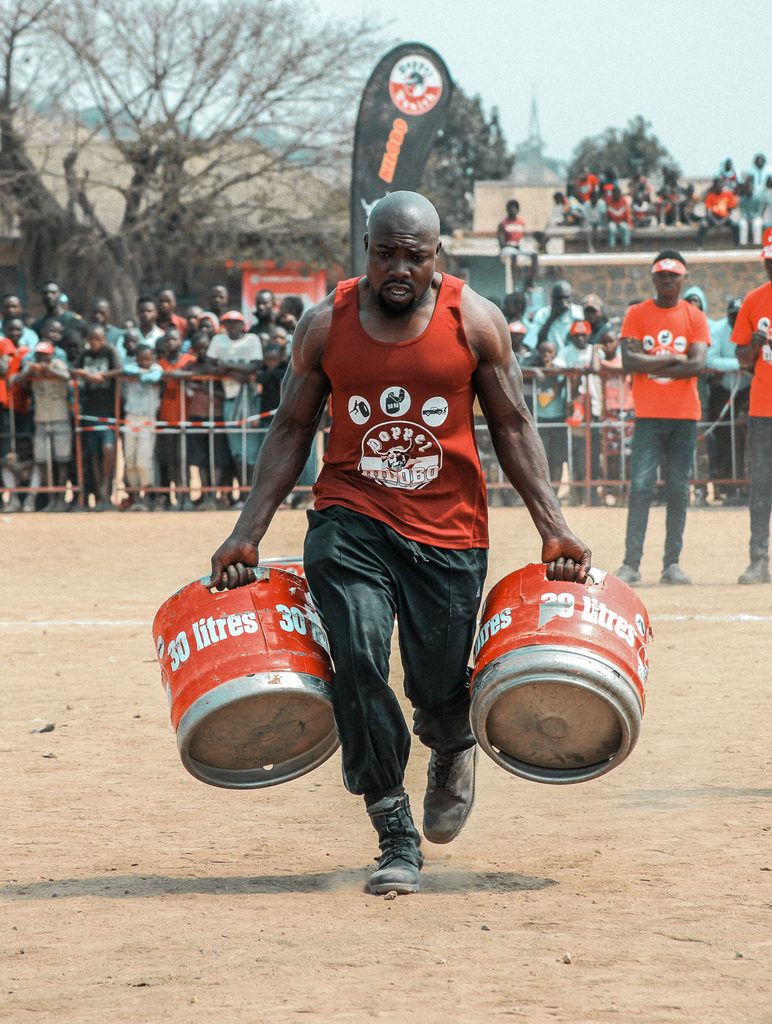
Your Website Should work Beyond Match Day
A sports website should not be treated as an online poster. It can become the organization's digital information hub. Depending on the organization, that could include:
Teams & Athletes
Profiles, Statistics, biographies, rosters and achievements.
Fixtures & Results
Upcoming events, previous results, competitions and schedules.
News & Media
Articles, Interviews, videos, photographs and announcements.
Tickets
Tickets information, purchasing options and event details.
Merchandise
Official Kits, apparel and other products.
Sponsors and Partners
Clear visibility for commercial partners and sponsorship opportunities.
Community & Development
Academies, grassroot programs, outreach and social initiatives.
Contact & Commercial Opportunities
A clear pathway for fans, media, sponsors and potential partners to reach the organization.
Global Reach
A clear opportunity to get exposure globally from all countries and regions.
The exact structure will vary, but the principle remains the same:
Your website should help the organization operate and communicate; not simply exist.
Search Engines Can Help New Fans Find You
Search visibility is another reason sports organizations should take their websites seriously. People search for teams, athletes fixtures, competitions, tickets, results, merchandise and sports-related information every day.
A properly structured website gives search engines a clearer understanding of what an organization does and what information it provides.
But SEO should not mean stuffing a page with keywords.
Google's current guidance emphasizes useful, original, reliable and people-first content, while also recommending that websites use language their audiences actually search for and structure content clearly. (Google for Developers)
For a sports organization, that means publishing genuinely useful information:
- Team and athlete profiles
- Competition Information
- Match reports
- Event previews
- Results
- Interviews
- Local sports news
- Community activities
- Historical content
- Useful fan information
Over time, this creates a searchable digital archive around the organization.
Digital Presence Also Builds Institutional Memory

This is an overlooked benefit. Sports organizations change. Players leave. Coaches change. Executives move on. Sponsors come and go. Competitions evolve.
Without a structured digital presence, much of an organization's history can disappear into social-media timelines or personal accounts.
A properly maintained website can preserve results, achievements, photographs, player histories, major announcements and important moments. That creates something more valuable than a feed of posts. It creates a digital record of the organization.
Being Active Matters More Than Being Everywhere
A sports organizations does not need to create an account on every platform simply because the platform exists.
The better questions is:
Where are our supporters, athletes, partners and potential supporters actually paying attention?
One organization may benefit heavily from Instagram and YouTube. Another may need a strong website, Facebook presence and WhatsApp communication. An international sports agency may prioritize LinkedIn, email and a professional website.
The strategy should follow the audience; not the trend.
And activity should have a purpose.
Every platform should contribute to one or more objectives :
Inform. Engage. Convert. Retain. Monetize.
If it does none of these, it may not deserve your resources.
The Digital Future of Sport Is Bigger Than Social Media
The next stage of sports technology is not simply about posting faster.
Sports organizations are building increasingly connected digital ecosystems involving websites, mobile applications, streaming, data, e-commerce, ticketing, CRM systems, digital communities and personalized fan experiences. (Frontiers)
For emerging sports markets, this creates an important opportunity.
Organizations do not necessarily need to replicate the infrastructures of the world's largest clubs overnight.
They need to start building the right foundations. A professional website. Consistent branding. Reliable information. A structured content strategy. Search visibility. Fan communication. Digital commercial opportunities. And systems that can grow as the organization grows.
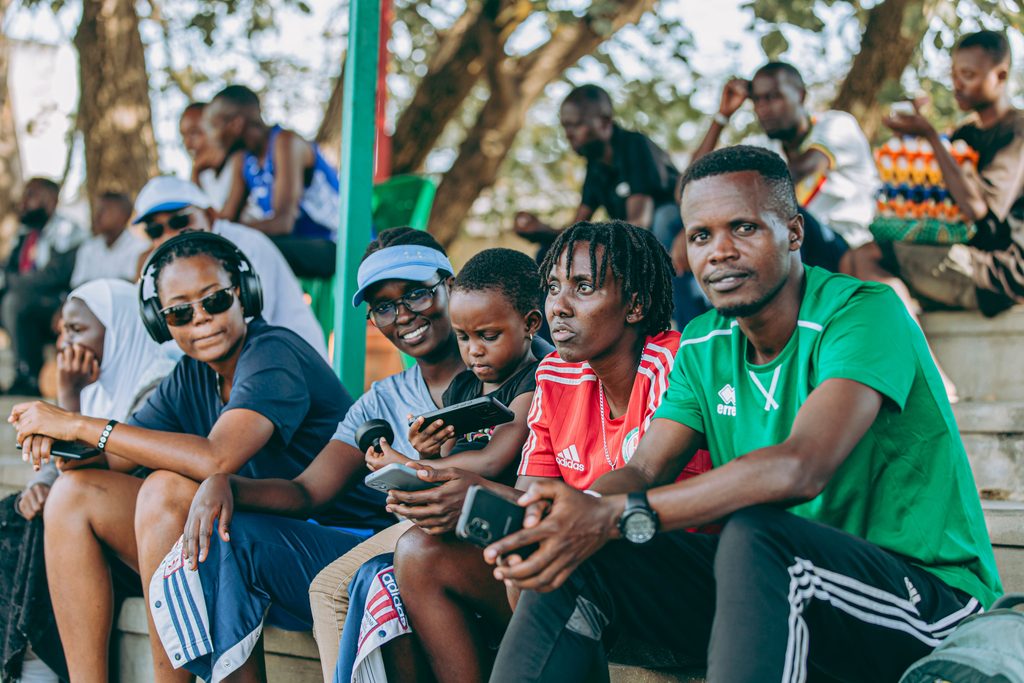
The Question Is No Longer Whether Your Sports Organization Needs a Digital Presence
The more useful question is :
what should that digital presence accomplish?
Should it attract new supporters?
Strengthen relationships with existing fans?
Increase ticketing sales?
Promote Athletes?
Create sponsorship value?
Sell merchandise?
Attract media attention?
Build an International audience?
Create new commercial opportunities?
The answer will be different for every organization. But the principle is increasingly universal:
Sport happens on the field, court, track, pitch, pool and arena. The relationship around it increasingly happens everywhere else.
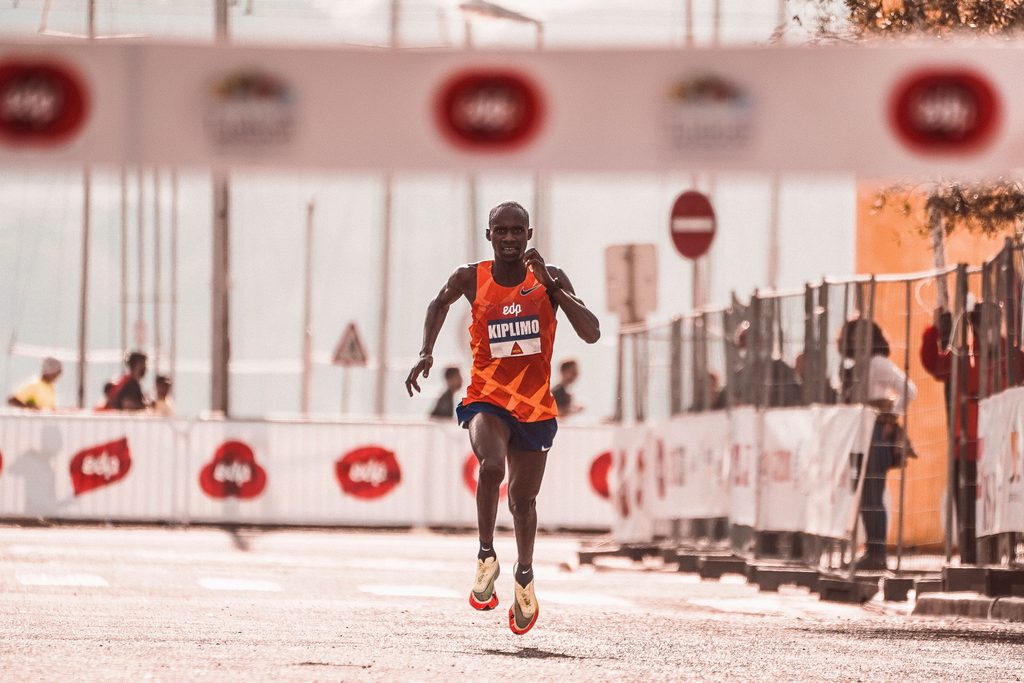
Organizations that treat their digital presence as an afterthought risk leaving part of that relationship unmanaged.
Those that build it deliberately can create a stronger connection between their sport, their supporters, their partners and their commercial future.
At KEFABO, we believe sports organizations should not simply have an online presence. They should have a digital ecosystem built with purpose.